-By: Olusegun Olopade
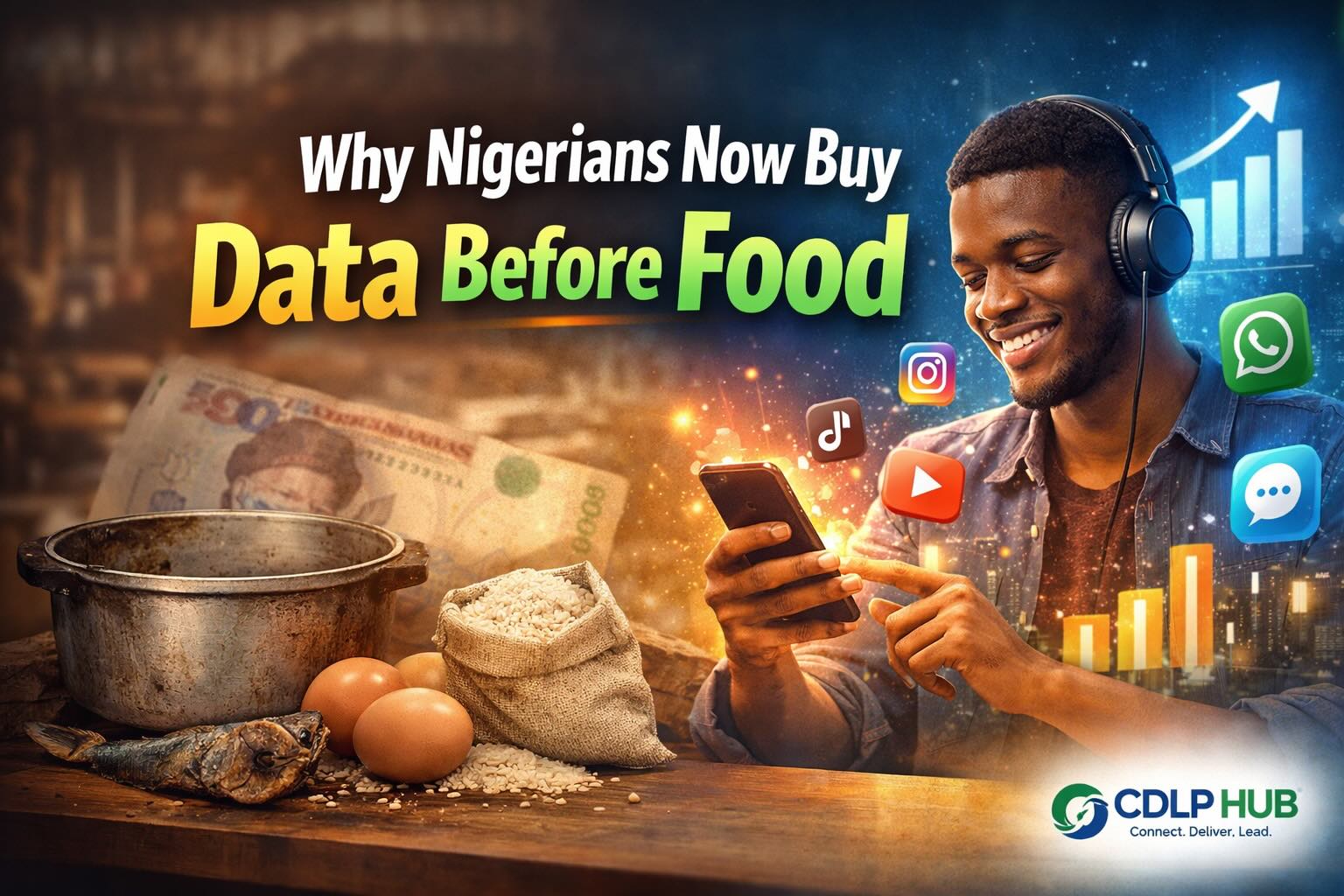
In many parts of Nigeria today, a curious shift has happened in everyday priorities. A person may complain about the rising price of rice, postpone buying meat, or even skip a proper meal—but still make sure they have data on their phone. For millions of Nigerians, airtime and data have quietly become everyday necessities, sometimes even more urgent than food.
At first glance, this may sound exaggerated. But when you observe daily life closely—especially among students, freelancers, small business owners, and young professionals—you begin to understand why data has become such an essential part of survival in Nigeria’s modern digital economy.
The Internet Has Become the New Workplace
One major reason for this shift is that the internet is no longer just for entertainment. For many Nigerians, it has become their primary tool for making money.
Freelancers rely on data to communicate with international clients, submit projects, and attend virtual meetings. Small business owners promote their products on WhatsApp, Instagram, and TikTok. Online vendors respond to customers, process orders, and receive payments through digital platforms.
Without data, work simply stops.
A vendor who sells through WhatsApp cannot respond to customer inquiries without internet access. A digital marketer cannot upload campaigns. A developer cannot deploy updates or collaborate with a remote team. In many cases, data is directly connected to income.
The Rise of the Digital Hustle
Nigeria has also witnessed an explosion of digital side hustles. From content creation and affiliate marketing to online tutoring and e-commerce, thousands of Nigerians are building income streams that depend entirely on internet access.
This has changed how people think about buying data. It is no longer seen as a luxury expense but as an investment that can generate returns.
Someone may spend ₦1,000 on data not just to browse social media, but to upload products, respond to customers, or manage an online store. In situations like this, that data can easily lead to sales that are worth much more than its cost.
Communication and Business Now Happen Online
Another reason data has become so critical is the way communication has evolved. Business conversations that once happened through calls or SMS now happen on messaging platforms.
Customer support happens on WhatsApp. Team updates are shared through digital collaboration tools. Payment confirmations and service notifications are sent online.
Being offline today can mean missing important opportunities or losing potential customers. In a connected economy, staying online is part of staying competitive.
The Growing Demand for Reliable Digital Services
As more Nigerians depend on the internet for work, communication, and business, the demand for reliable, affordable digital services continues to grow.
This is where platforms that simplify digital transactions become extremely important.
Instead of searching for unreliable vendors or worrying about failed transactions, users now prefer platforms that allow them to purchase airtime, data, and other digital services instantly and securely.
How CDLP Hub Supports Nigeria’s Digital Economy
This growing digital dependence is exactly where CDLP Hub Ltd plays a vital role.
CDLP Hub provides a reliable platform that allows individuals and businesses to easily purchase airtime, data bundles, and pay bills in a fast and secure way. By simplifying these everyday digital services, the platform helps Nigerians stay connected without unnecessary stress.
Beyond convenience, CDLP Hub also supports the growing community of digital entrepreneurs and resellers. Through its VTU services, individuals can start their own airtime and data resale businesses, turning a simple digital service into a source of income.
For many students, entrepreneurs, and small business owners, this creates an opportunity to participate in Nigeria’s digital economy without needing large startup capital.
In a country where connectivity drives productivity, platforms like CDLP Hub help ensure that people remain connected to the tools and opportunities that power their daily lives.
A Reflection of a Changing Economy
The idea that Nigerians “buy data before food” is not necessarily about choosing the internet over basic needs. Rather, it reflects how deeply digital connectivity has become embedded in everyday life.
Access to data now means access to customers, education, jobs, and financial opportunities. It is a gateway to participating in a rapidly evolving digital economy.
As Nigeria continues to move further into a technology-driven future, reliable platforms that provide seamless access to airtime, data, and digital services will become even more important.
And for millions of Nigerians navigating work, business, and opportunity online, staying connected is no longer optional—it is essential.
